
 ASL
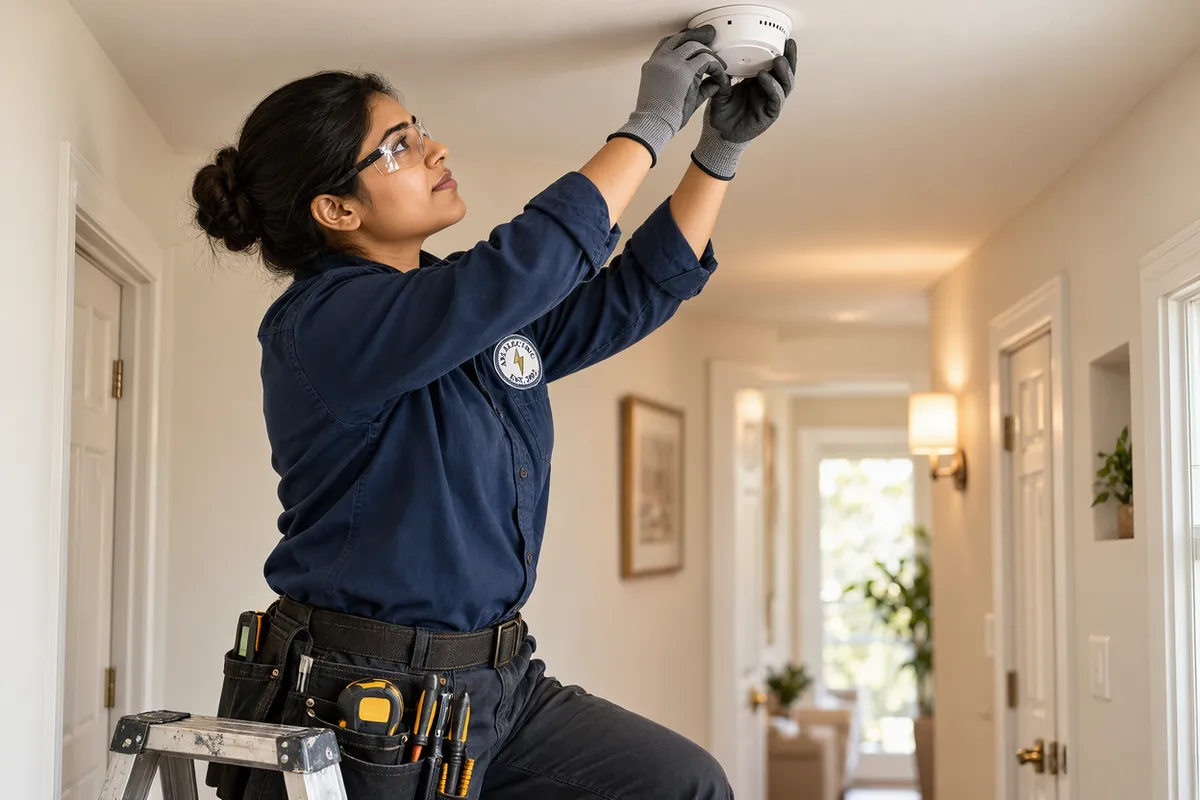
Working smoke and carbon monoxide alarms are among the most important safety devices in any home, and California has specific rules about where they go and what type they must be. ASL Electric installs, replaces and upgrades hard-wired, interconnected smoke and CO alarms in Orange County homes, rentals and multifamily buildings, so when one alarm sounds, they all do.
Alarms wear out: manufacturers typically recommend replacing smoke alarms about every 10 years, and many homes still have the alarms that came with the house. We replace aging alarms, add alarms where they are missing, interconnect them so everyone hears an alarm anywhere in the home, and make sure your home meets California requirements for a sale, a permit or a rental.
Smoke and CO alarm services
⚡Hard-wired alarm replacement
Replacing old hard-wired smoke alarms with new units with battery backup, matched to your existing wiring and interconnection.
⚡Interconnected systems
Interconnecting alarms, by wire or by listed wireless interconnect, so all alarms sound together when one detects smoke.
⚡Carbon monoxide alarms
CO alarms or combination smoke and CO alarms in homes with gas appliances, fireplaces or attached garages.
⚡Adding missing alarms
Adding alarms in bedrooms, hallways and on every level where they are required but missing.
⚡Rental and multifamily compliance
Alarm updates for landlords, property managers and HOAs between tenants or for compliance.
⚡Chirping and nuisance alarms
Fixing alarms that chirp, sound for no reason or have reached end of life.
Signs your alarms need attention
Replace or service your alarms if:
- They are more than 10 years old (check the date on the back)
- They chirp even with a new battery
- They sound with no smoke present
- There is no alarm in each bedroom
- There is no CO alarm and you have gas appliances or an attached garage
- Alarms are not interconnected
- You are selling the home or pulling a permit
- You manage a rental between tenants
Why interconnected alarms matter
A fire that starts in a garage or living room at night may not wake someone sleeping behind a closed door down the hall. Interconnected alarms sound throughout the home the moment any one detects smoke, giving everyone more time to get out. Carbon monoxide is colorless and odorless; an alarm is the only way to know it is present. Updating old, missing or disconnected alarms is one of the most valuable small investments you can make in your family's safety.
How we install smoke and CO alarms
Check what you have
We identify existing alarms, their age, wiring and interconnection, and where alarms are missing.
Plan locations
We place alarms in each sleeping room, outside each sleeping area and on every level, and add CO protection where required, away from locations that cause nuisance alarms.
Install and interconnect
We install hard-wired alarms with battery backup and interconnect them by wire or listed wireless interconnect where running new wire is impractical.
Test every alarm
We test each alarm and the interconnection, and show you how to test and maintain them.
Alarm options
Replace hard-wired alarms
New units with battery backup on your existing wiring.
Combination smoke and CO
One device for both hazards, reducing the number of units on the ceiling.
10-year sealed battery alarms
No battery changes for a decade, where hard-wiring is not required.
Wireless interconnect
Links alarms together without running new wire through finished walls.
California smoke and CO alarm requirements
California requires smoke alarms in each sleeping room, outside each separate sleeping area in the immediate vicinity of the bedrooms, and on every level of the home. Since July 1, 2014, new smoke alarms that operate solely on battery power must have a non-replaceable 10-year battery. Since January 1, 2014, permits for work valued over $1,000 on a dwelling trigger requirements that the smoke alarms meet current rules, and hard-wired alarms require battery backup.
Since 2013, carbon monoxide alarms are required in dwelling units that have a fossil-fuel burning appliance, a fireplace or an attached garage. Alarms are commonly checked during home sales and permit inspections.
Hard-wired, battery or wireless interconnect?
Hard-wired alarms with battery backup are standard in newer homes and required in new construction and many remodels. Sealed 10-year battery alarms are allowed in many existing homes and are a good option where no wiring exists.
Interconnection is what ties the system together. In homes without interconnect wiring, listed wireless-interconnect alarms can link alarms without opening walls. We recommend the right combination for your home and any permit requirements.
Where not to put an alarm
Placement matters for avoiding false alarms. Smoke alarms should be kept away from cooking appliances, bathrooms with showers, and close to heating and air vents that can blow smoke away or trigger nuisance alarms. Many manufacturers specify minimum distances from these locations.
Carbon monoxide alarms follow their own placement guidance, typically outside sleeping areas and on each level, and should not be placed right next to fuel-burning appliances. We follow the manufacturer's instructions and California requirements to place each alarm where it works best.
Hardwired, interconnected alarms
Many homes have hardwired smoke alarms with a battery backup, and in many cases they are interconnected, so when one alarm sounds, every alarm sounds. New construction and many remodels require this. If you are replacing hardwired alarms, the new alarms must be compatible with each other and with the existing wiring; mixing brands usually breaks the interconnection.
We replace hardwired alarms with compatible units, test the interconnection, and can add wiring for new alarm locations when you remodel or add a room.
What affects the cost of smoke and CO alarm work
Cost depends on the number of alarms, whether they are hard-wired, battery or combination units, whether new wiring is needed for added locations, interconnection method, ceiling height, and whether the work is tied to a permit or rental compliance. We provide a free estimate and an upfront price.
How it works with ASL Electric
We review your existing alarms, their age and where any are missing.
You get a clear plan and price for replacement and additions.
We install, interconnect and test every alarm, and show you how to maintain them.
Smoke & CO Detector Installation across Orange County
In Orange County's older homes, the original smoke alarms are often long past their recommended replacement age, and many homes have a gas range, fireplace or attached garage that calls for CO alarms. An Irvine homeowner called us when it was time to replace all of their smoke detectors, and we scheduled them at the time slot they preferred.
In Laguna Woods Village, where many residents are seniors, working, interconnected alarms are especially important, and electrical work in a manor generally requires Mutual Consent and a City permit; we have worked in the Village and can help. We also update alarms for landlords and property managers in Laguna Hills, Mission Viejo, Tustin and across the county.