 ASL
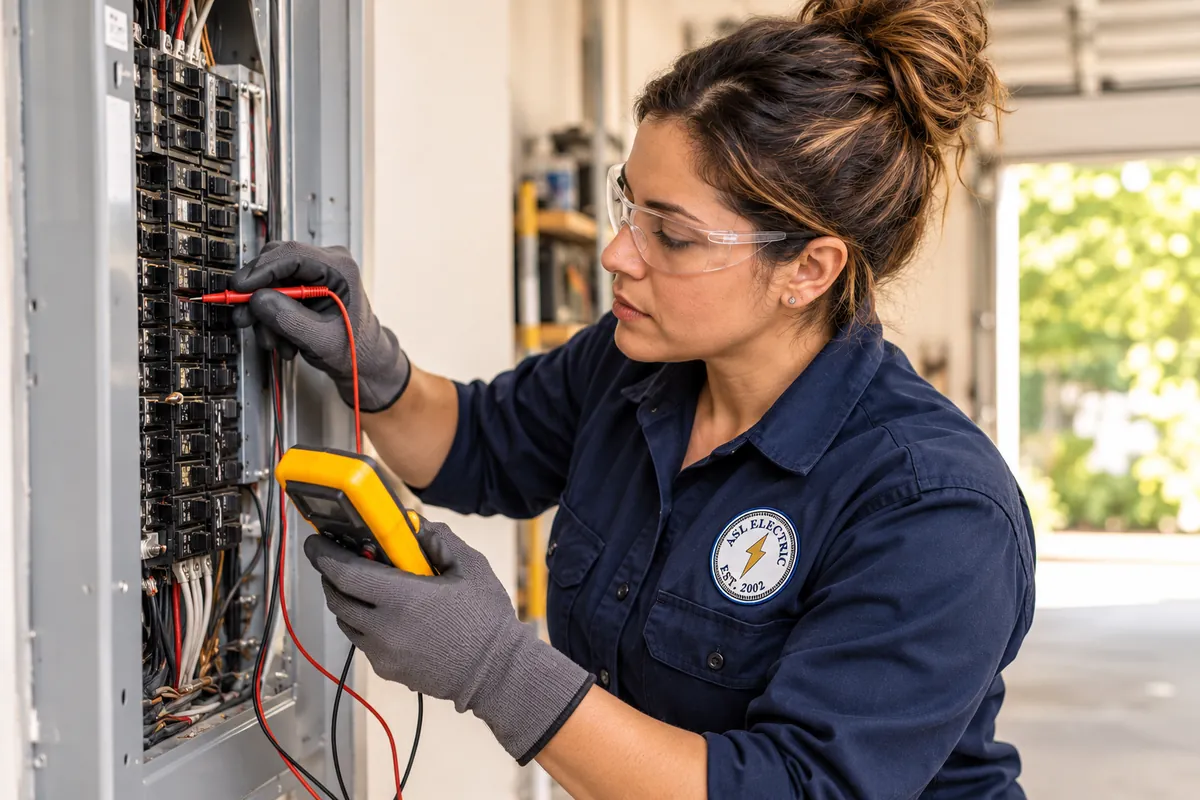
A breaker that will not reset, trips for no clear reason, feels hot or buzzes is telling you something. ASL Electric repairs electrical panels and replaces breakers for homes and businesses across Orange County. We find out why the breaker is acting up, fix the real cause, and replace breakers only with listed, compatible parts for your panel.
Most breaker problems are not the breaker's fault. A breaker that keeps tripping is often doing its job, protecting a circuit that is overloaded, shorted or has a ground fault. We test the circuit and the breaker before replacing anything, so you do not pay for a new breaker that trips just like the old one. When the breaker or the panel itself is the problem, we repair or replace it the same visit whenever possible.
Panel and breaker repairs we handle
⚡Breaker replacement
Worn, damaged or failed breakers replaced with listed breakers made for your panel, never mismatched brands.
⚡Breakers that will not reset
Diagnosis of the circuit and breaker, and repair of the short, ground fault or failed part causing it.
⚡AFCI and GFCI breakers
Installation of arc-fault and ground-fault breakers, and troubleshooting of nuisance tripping on existing ones.
⚡Loose and overheated connections
Repair of loose lugs, burnt conductors and heat-damaged bus connections inside the panel.
⚡Double taps and panel corrections
Corrections for double-tapped breakers, missing knockouts, missing screws and unlabeled circuits.
⚡Corrosion and water damage
Evaluation and repair or replacement of panels damaged by moisture, common on exterior and coastal panels.
Warning signs at your panel
Call an electrician if you notice:
- A breaker that trips repeatedly or will not reset
- A breaker or panel cover that feels hot
- Buzzing, crackling or humming from the panel
- A burning smell or scorch marks near the panel
- Rust or water inside the panel
- Lights that flicker or dim across several rooms
- Breakers that feel loose or do not snap into place
- A Federal Pacific or Zinsco panel
Why panel problems should be fixed promptly
Heat is the enemy inside a panel. A loose connection or failing breaker can heat the bus and the conductors until they damage insulation or the panel itself. A breaker that fails to trip leaves a circuit unprotected. And repeatedly resetting a tripping breaker, or replacing it with a larger one, can hide a fault that keeps getting worse. Fixing the cause early is safer and usually far less expensive than repairing heat damage later.
Recent work by our electricians
All projects ›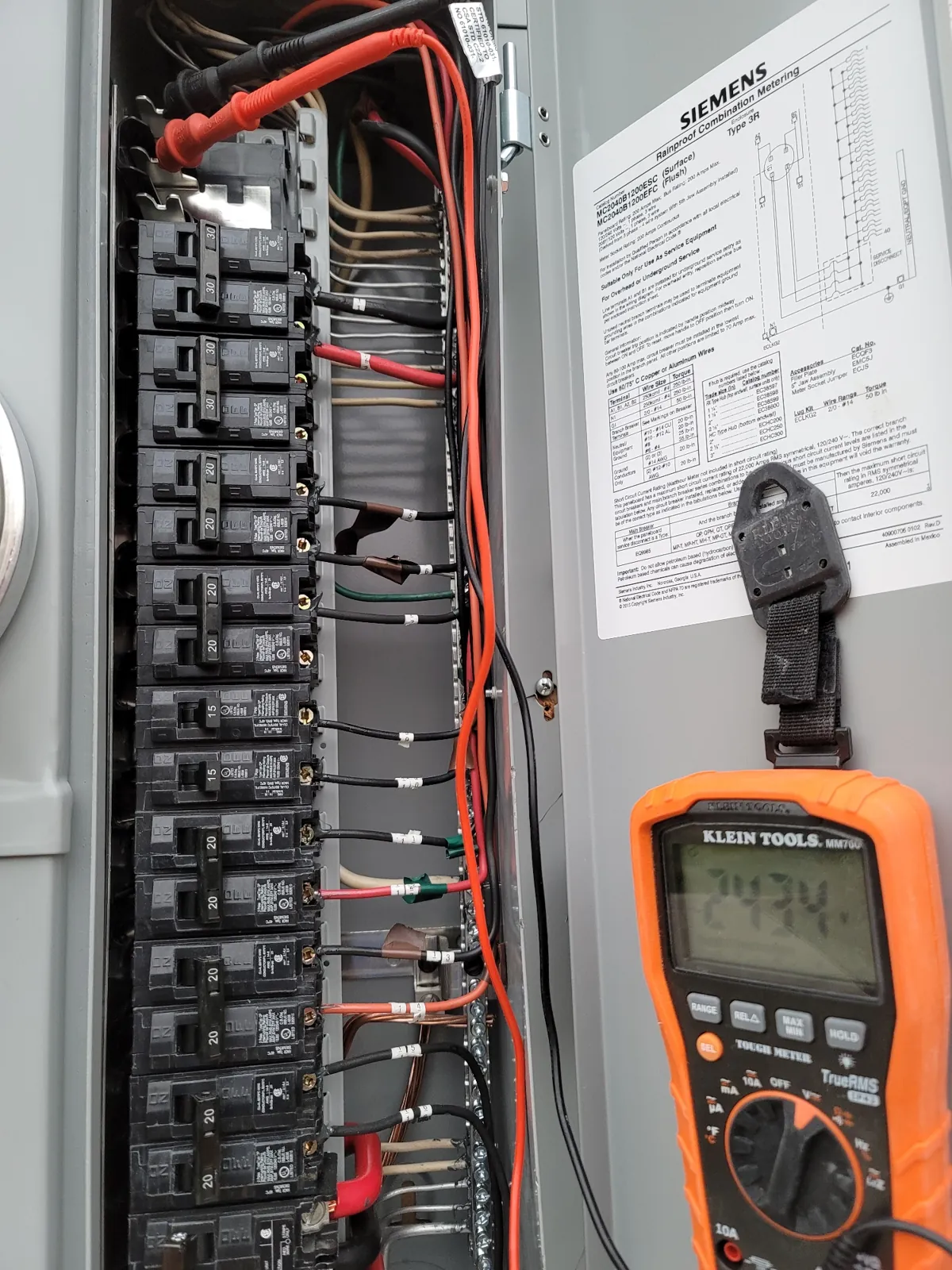
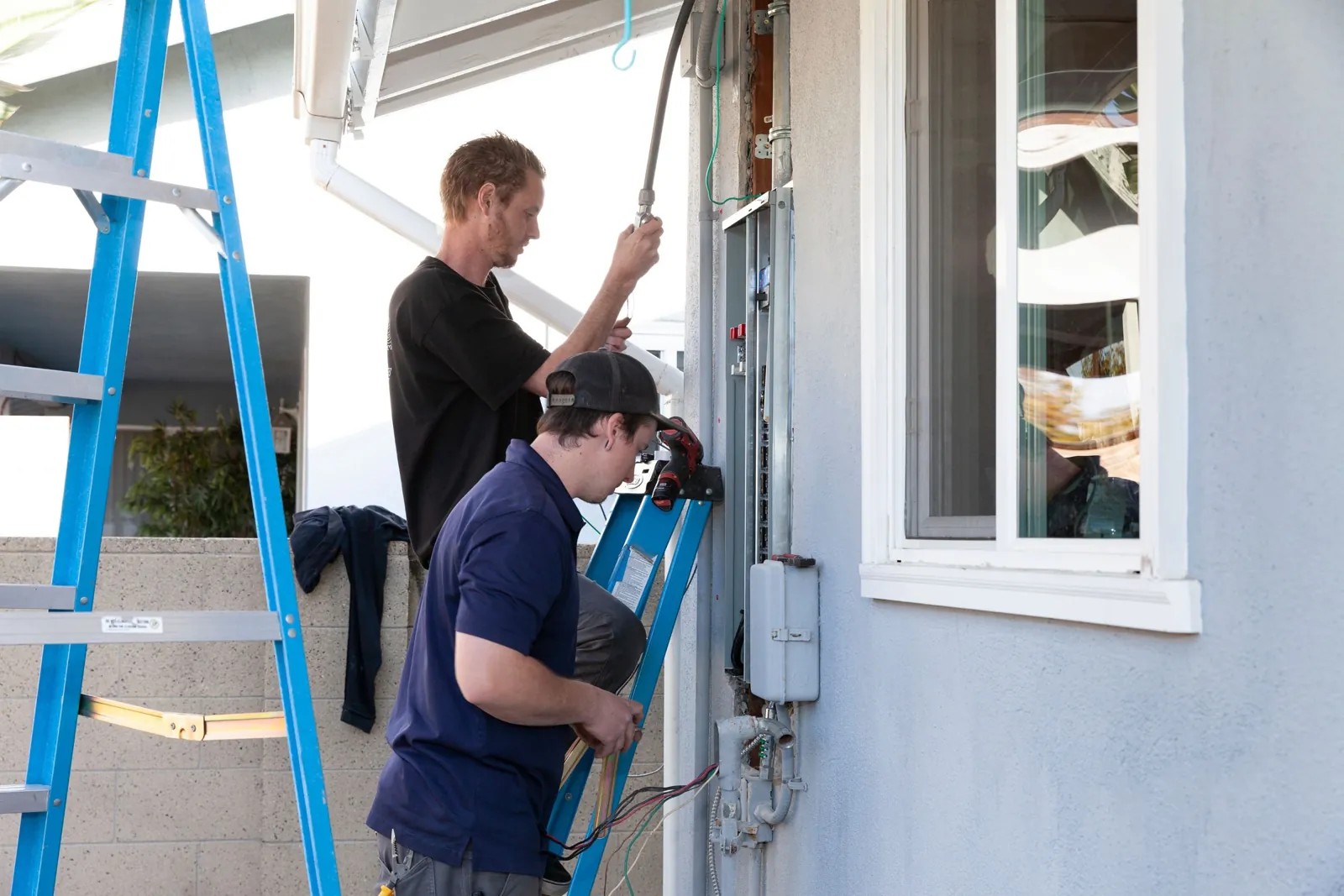
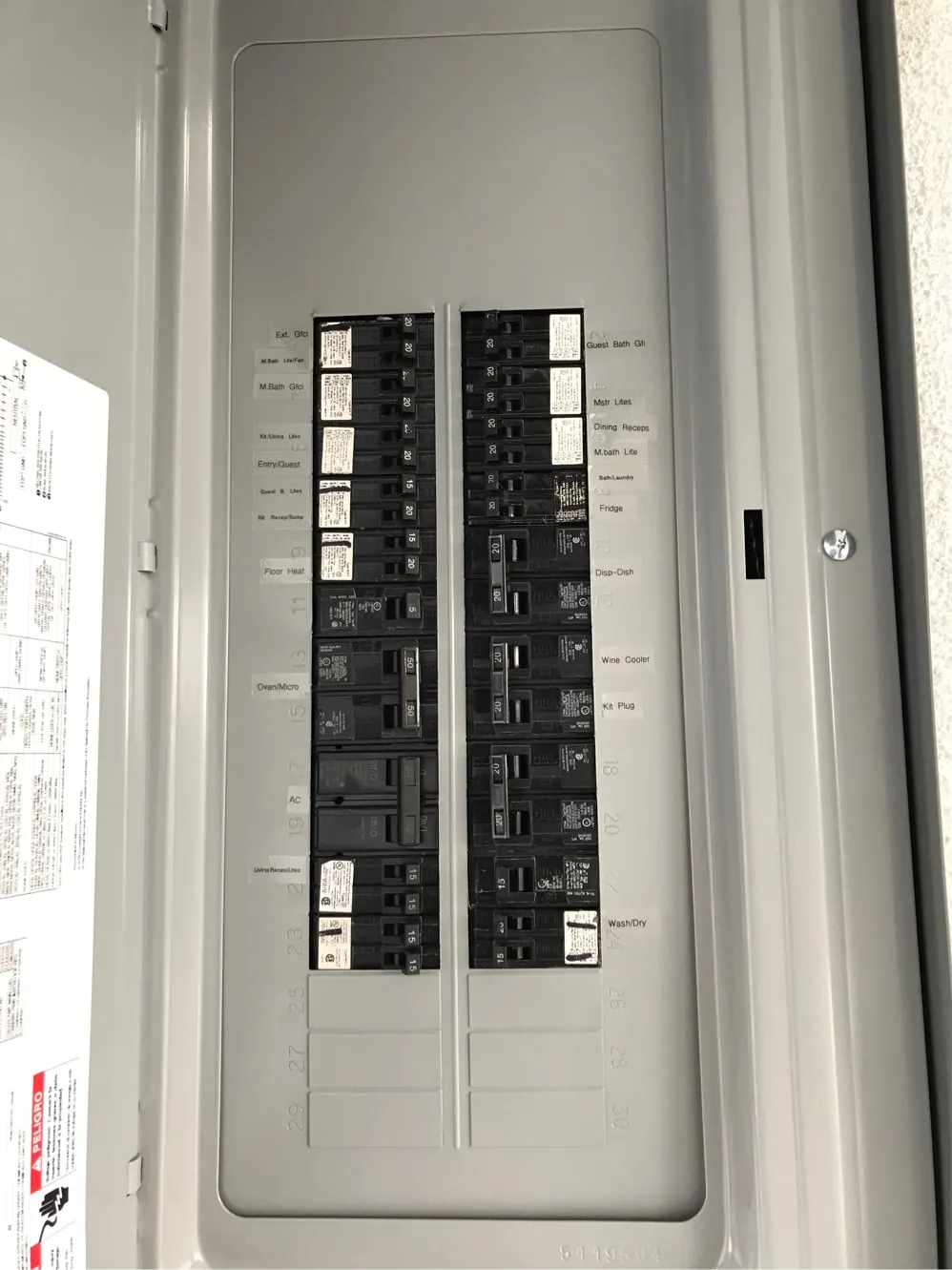
Real ASL Electric jobs in Orange County homes and businesses.
How we repair a panel
Test before replacing
We test the circuit for overloads, shorts and ground faults, and check the breaker and its connection to the bus.
Thermal and visual check
We look for discoloration, loose lugs, corrosion and heat damage throughout the panel.
Listed, compatible parts
We replace breakers only with listed breakers made for your panel, and never upsize a breaker beyond what the wire allows.
Tighten, label, test
We torque connections, correct labeling and test the circuits before we leave.
Typical outcomes
Circuit repair
The breaker is fine; the fault is in the wiring or a device.
Breaker replacement
A failed or damaged breaker replaced with a listed, compatible one.
Panel repair
Connections tightened, damage repaired and corrections made.
Panel replacement
When the panel is damaged, obsolete or a problem brand.
Why you should never install a bigger breaker
If a 15 or 20 amp breaker keeps tripping, it can be tempting to install a larger one. The breaker is sized to protect the wire in the wall, not the appliance. A larger breaker lets the wire overheat before it trips.
The right fix is to find out why the circuit is overloaded and move loads to a dedicated circuit if needed. See our dedicated circuits page.
Repair or replace the panel?
Many panels only need a breaker, a tightened connection or a few corrections. If the bus is damaged, parts are no longer available, the panel is corroded, or it is a Federal Pacific or Zinsco, replacement is usually the better choice. We explain both options and the reasons, then you decide. See our panel upgrades page for replacements.
AFCI nuisance tripping
Arc-fault breakers are required on many circuits in California and protect against hidden wiring faults. Sometimes they trip because of a real wiring problem, sometimes because of a shared neutral or a particular appliance. We troubleshoot the circuit so the protection stays in place and the tripping stops.
“Walter was prompt and able to check our breaker that we wanted him to look at. Upon returning with the new information I gave him he was able to find the root of a different problem that needed to be fixed.”
“Upon a quick inquiry I received a response within minutes with a quick estimate but with a caveat to changes if, after inspection additional work might be needed. Appt made to my convenience and "Walter" arrived ready to work. Walter was courteous, clean, friendly and knowledgeable. Work completed with care and expertise that only a qualified electrician would do.”
What affects the cost of a panel repair
The cost depends on what is causing the problem, the breaker type (standard, AFCI or GFCI) and its availability, whether the bus or conductors are damaged, the panel's location and condition, and whether a permit is required. We diagnose first and give you an upfront price before any repair.
How it works with ASL Electric
We test the circuit, the breaker and the panel to find the real cause.
You approve the repair before we start.
We fix the problem, test the circuits and explain what we found.
Breaker Replacement & Panel Repair across Orange County
We repair panels across Orange County every week. Exterior panels in coastal cities like San Clemente, Dana Point, Laguna Beach, Newport Beach and Huntington Beach often show corrosion from salt air. Older homes in Lake Forest, Laguna Hills, Mission Viejo and Costa Mesa may have original panels where replacement breakers are hard to find or the panel itself is the issue.
If a breaker problem comes with a burning smell, heat or sparking, treat it as an emergency: our dispatch line is answered 24/7. See our emergency electrician page.