 ASL
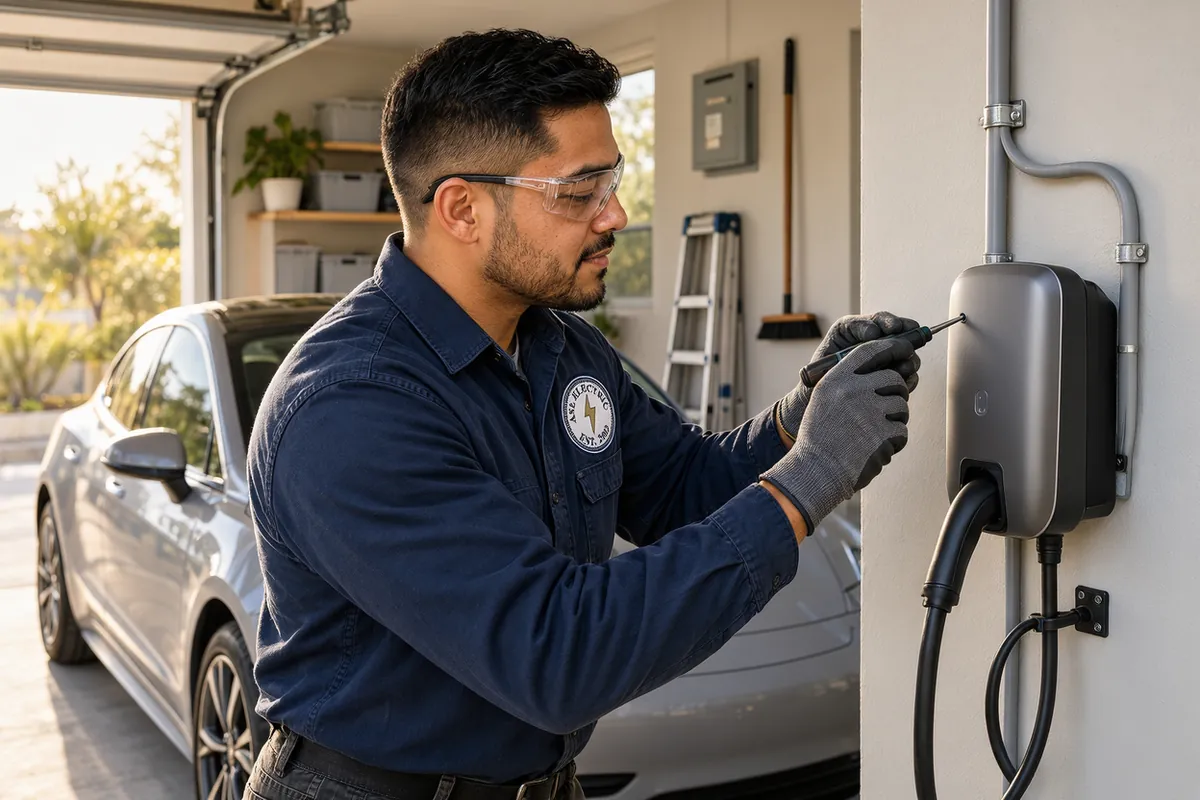
Charging at home is the best part of owning an electric vehicle. Plug in when you get home, and the car is ready in the morning, without stops at public chargers. To get there safely, you need a Level 2 charger on a properly sized dedicated circuit, installed by a licensed electrician who checks first that your panel can handle it. ASL Electric installs EV chargers for homes and businesses across Orange County.
We install wall-mounted Level 2 chargers and 240V outlets for Tesla, Rivian, Ford, Chevrolet, Hyundai, Kia, BMW and every other EV and plug-in hybrid, and we work with the major charger brands, including Tesla Wall Connector, ChargePoint, Wallbox, JuiceBox, Grizzl-E, Emporia and others. Every installation starts with a load calculation, so you know whether your existing panel can support the charger or whether a panel upgrade or load management is the smarter path.
EV charging installations we handle
⚡Hardwired Level 2 chargers
A wall-mounted charger hardwired to a dedicated 240V circuit is the cleanest, most robust setup and lets most chargers deliver their full rated power. We size the circuit and breaker to the charger's specifications.
⚡NEMA 14-50 and 6-50 outlets
A heavy-duty 240V outlet works with portable chargers and many plug-in wall units. We install high-quality, industrial-grade receptacles designed for continuous EV loads, not bargain outlets that can overheat.
⚡Tesla Wall Connector
Installation of Tesla's wall connector, including setup of the circuit size in the app and power sharing between two units if you have more than one Tesla.
⚡Panel upgrades and load management
If your panel cannot support the charger, we upgrade the service or install a load management device that lets the charger share capacity safely with the rest of the house.
⚡Garage, driveway and carport installs
Chargers on garage walls, exterior walls and pedestals near driveways, with outdoor-rated equipment and conduit where the cable has to travel.
⚡Commercial and multifamily charging
Chargers for businesses, workplaces, HOAs and apartment communities, including multiple chargers, load planning and power sharing.
Questions we answer before installing a charger
These determine the right installation for your home:
- What is your panel's size and how much capacity is left?
- How many miles do you drive on a typical day?
- One EV or two, now or soon?
- Hardwired charger or a 240V outlet?
- Where will the car park and where is the panel?
- Inside the garage or outside on a wall or pedestal?
- Do you need a permit and HOA approval?
- Would load management avoid a panel upgrade?
Why a licensed installation matters for EV charging
An EV charger draws a large current for hours at a time, which is the most demanding job most home circuits will ever do. Undersized wiring, a cheap outlet or loose terminations can overheat under that continuous load. A licensed electrician sizes the circuit correctly, uses equipment rated for continuous EV duty, confirms the panel has capacity and pulls the permit, so your charger is safe every night it runs.
Recent work by our electricians
All projects ›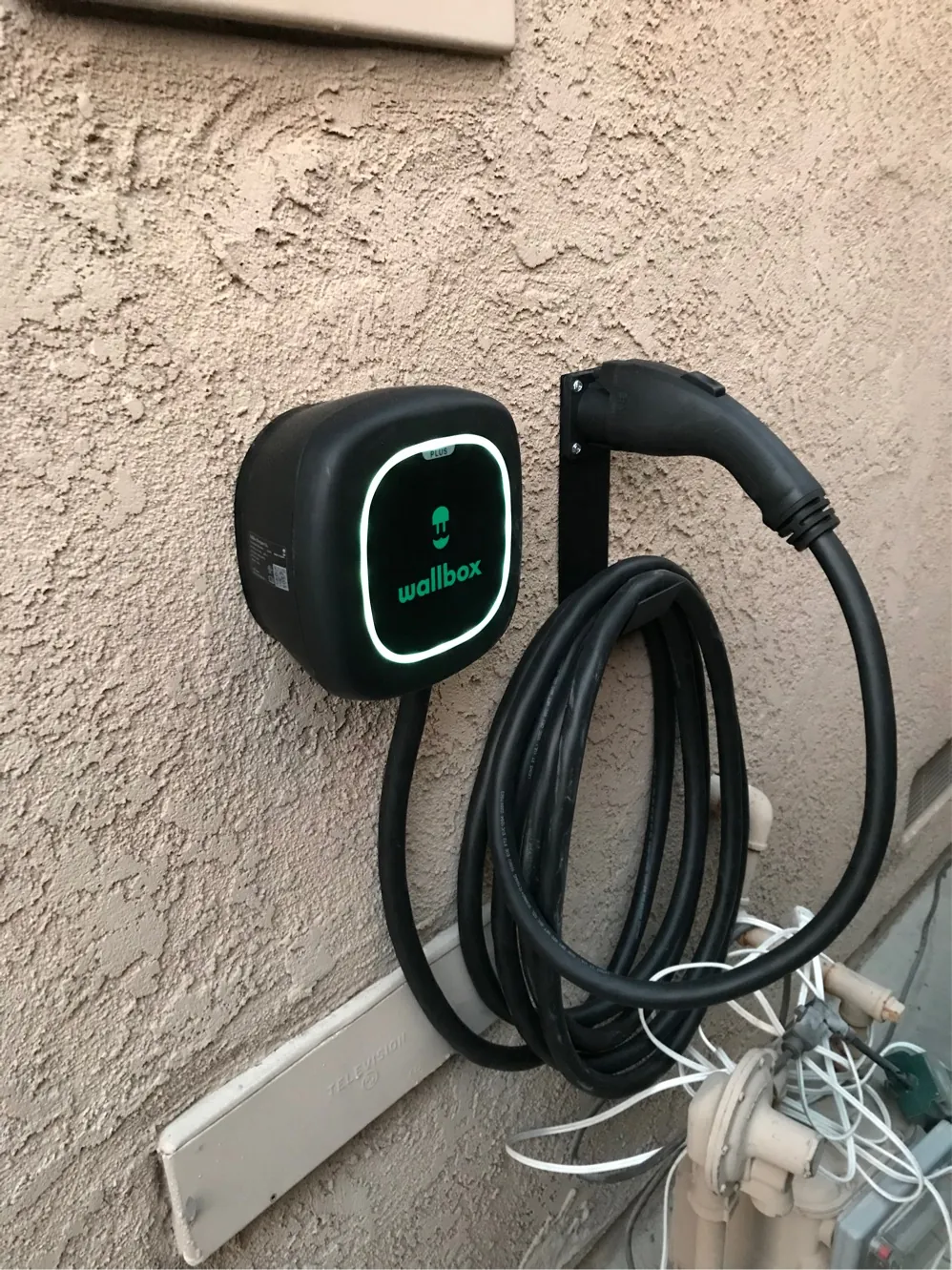
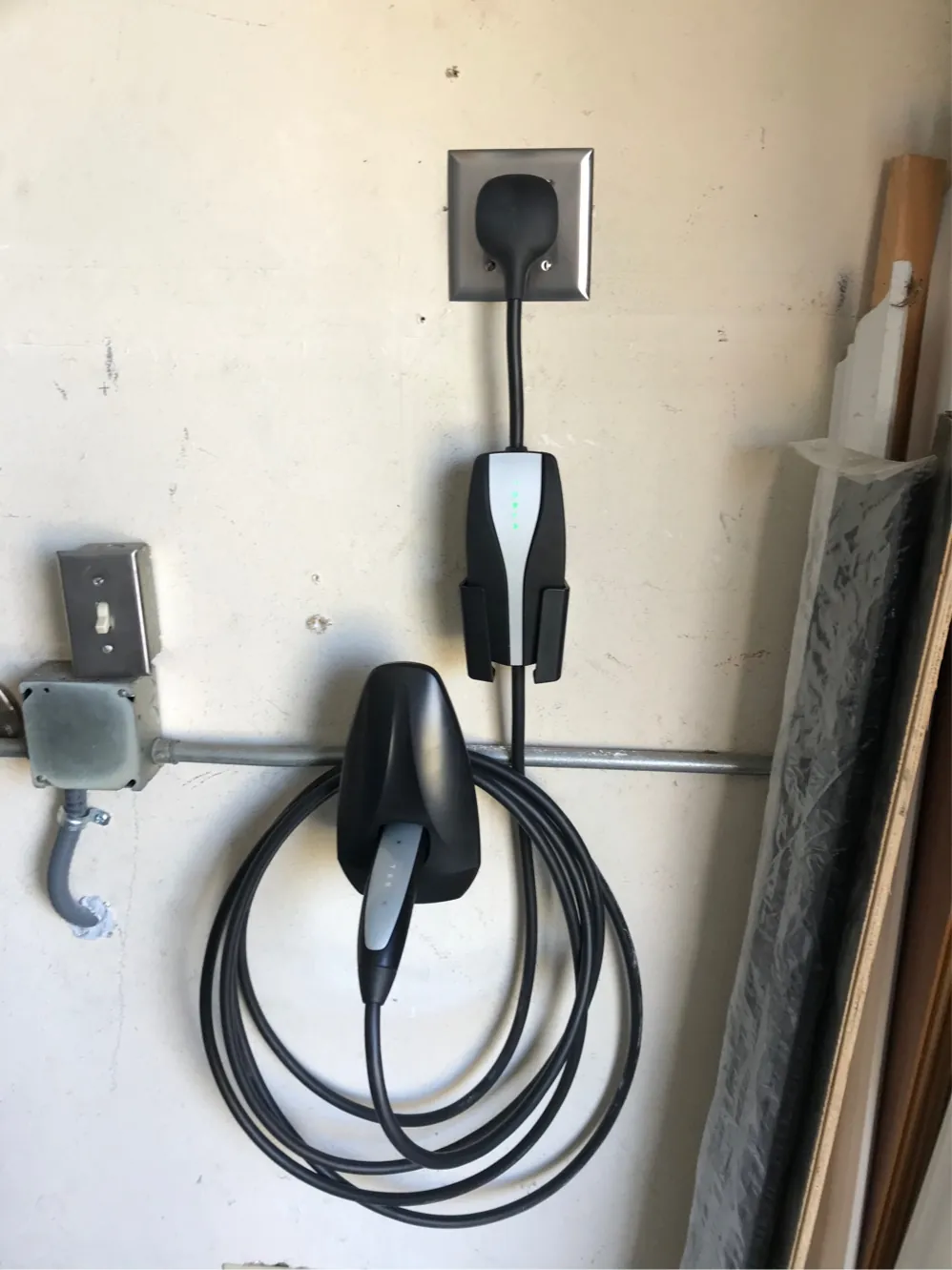
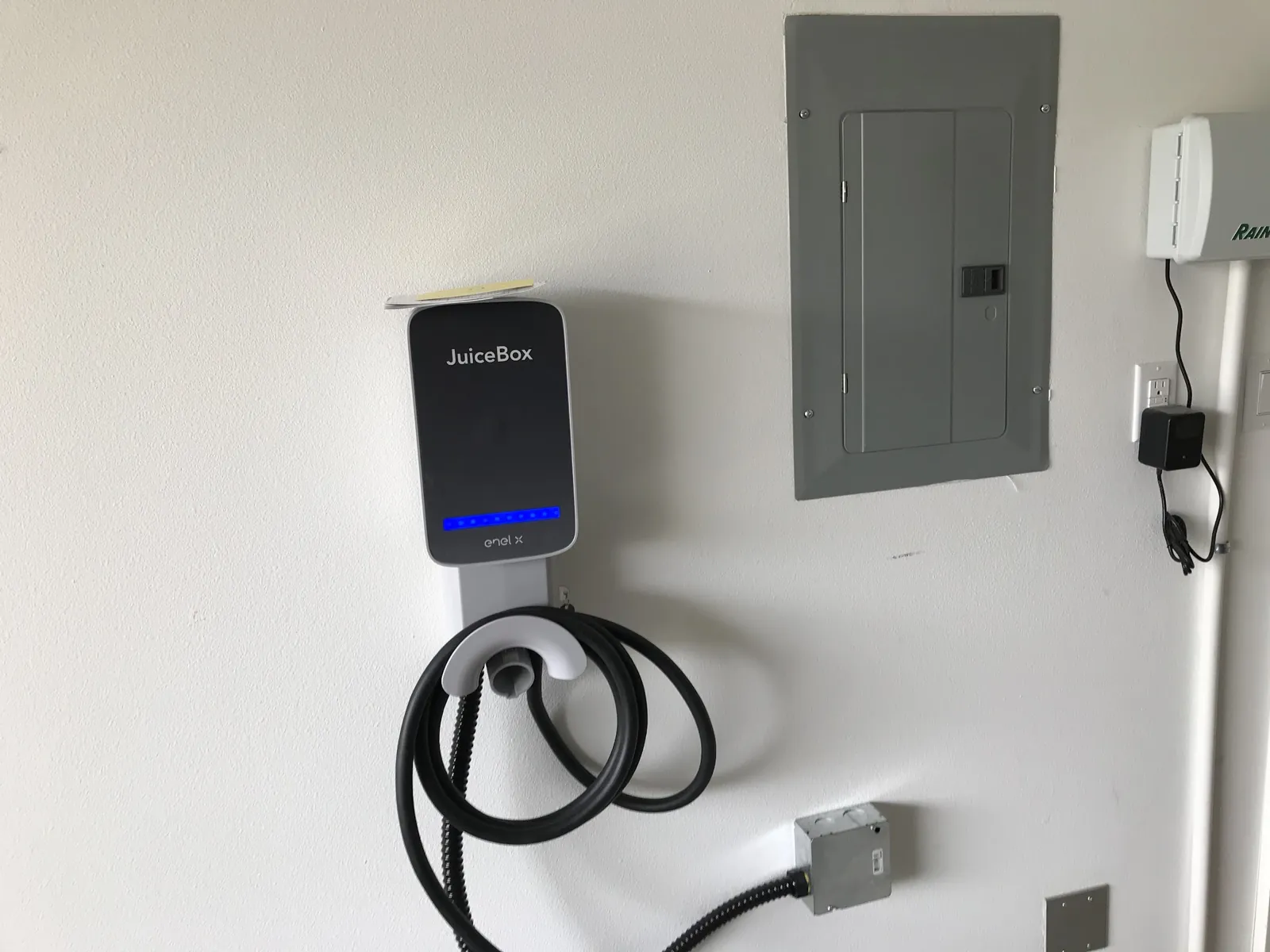
Real ASL Electric jobs in Orange County homes and businesses.
How we install your EV charger
Load calculation first
We look at your panel, service size and existing loads like air conditioning, cooking and dryers, and calculate how much capacity is available for EV charging.
Right-size the circuit
We match the circuit and breaker to your charger and your driving needs. Many drivers do not need the largest circuit; a correctly sized circuit can fully recharge a typical daily commute overnight.
Clean, protected installation
We route the wiring the shortest safe way, in conduit where exposed, mount the charger at a practical height and add outdoor-rated equipment for exterior locations.
Permit, test and setup
We pull the permit, test the circuit and charger, configure the charger's amperage setting to match the circuit and make sure your car is charging before we leave.
Charger setup options compared
Hardwired wall charger
Best overall: cleanest installation, full rated power and no outlet to wear out.
240V outlet with plug-in charger
Flexible and easy to swap chargers later, when installed with a heavy-duty receptacle.
Charger with load management
Best when the panel is near capacity: avoids or delays a service upgrade.
Panel upgrade plus charger
Best when you are adding two EVs, a heat pump or other big loads at the same time.
Level 1 vs Level 2 charging
Level 1 charging uses a standard 120V household outlet and adds only a few miles of range per hour, which can work for a plug-in hybrid or a very short commute. Level 2 charging uses a 240V circuit and adds range many times faster, so a typical EV can recover a full day's driving overnight with room to spare.
For almost every EV owner, Level 2 is the right home setup. The real question is how big the circuit needs to be, and that depends on your driving, your car's onboard charger and your panel, not on buying the most powerful charger available.
Utility rate plans and incentives
Charging at night is usually the least expensive time to charge. Southern California Edison offers EV-friendly time-of-use plans such as TOU-D-PRIME, and SDG&E offers EV plans such as EV-TOU-5 for homes in its territory, including San Clemente, San Juan Capistrano, Dana Point, Ladera Ranch and Rancho Mission Viejo. Most chargers and cars let you schedule charging to start in off-peak hours.
Incentive programs change often. The federal home charger tax credit ended for equipment placed in service after June 30, 2026, so check current utility and local programs before you buy. We are happy to help you choose a charger that fits whatever program you plan to use.
“Had them run 25ft of cable from my existing 220 and install my Tesla Wall Charger. They were quick to respond, very profession and the work was very well executed at a great price point. Definitely will be using them again.”
What affects the cost of EV charger installation
The biggest factors are the distance from the panel to the charger location, whether the panel has capacity or needs an upgrade or load management, whether the wiring runs through an attic, wall or conduit on the exterior, indoor versus outdoor installation, the charger type and circuit size, and permit and HOA requirements. We provide a free estimate after looking at your panel and parking location.
How it works with ASL Electric
We look at your panel, the parking location and the route for the wiring, and run a load calculation.
You get a clear recommendation for the charger setup, circuit size and any panel work, with an upfront price.
We install the circuit and charger, pull the permit, test everything and confirm your car is charging.
EV Charger Installation across Orange County
EV charging is one of the fastest growing calls we get across Orange County. In Lake Forest, Irvine, Laguna Hills and Laguna Beach, many homes were built long before EVs with 100A to 200A services that are already busy, so a load calculation is the first step and some homes need a panel upgrade or load management. Customers have had us run cable from an existing 240V circuit to install a Tesla Wall Connector, and replace an overheating outlet with a proper heavy-duty NEMA 14-50.
In newer communities like Rancho Mission Viejo, Ladera Ranch and Irvine's newer villages, garages are often pre-wired or close to the panel, which makes installation simpler, but HOA rules may apply to exterior chargers. In Laguna Woods Village, EV chargers require Mutual Consent and a City of Laguna Woods permit, which we can help you navigate. Whether you are on Southern California Edison or SDG&E, we install and permit your charger the right way.