
 ASL
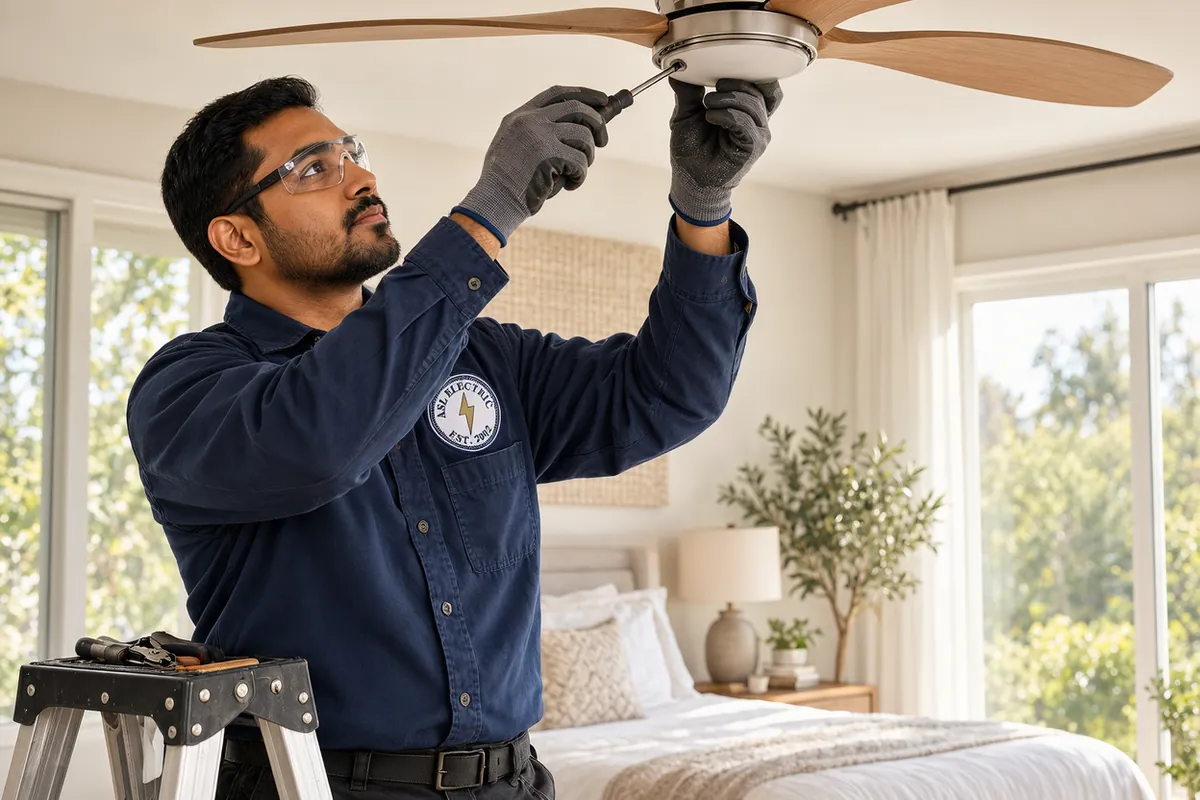
A well-chosen ceiling fan makes a room more comfortable year round and can let you run the air conditioning less in Orange County's warm months. But a fan is a heavy, spinning appliance mounted overhead, and how it is installed matters. ASL Electric installs, replaces and repairs ceiling fans across Orange County, with the right size for the room, a properly rated mounting box, safe wiring to current code and a balanced, wobble-free result.
Proper fan installation comes down to four things: checking that the circuit can handle the added load, sizing and placing the fan for the room, mounting it on a fan-rated box secured to structure, and wiring it correctly with the controls you want. Skip one and you get a fan that wobbles, hums, trips a breaker or, worst case, comes loose. We do all four on every job.
Ceiling fan services we provide
⚡New ceiling fan installation
Installing a fan where there was no fixture, including running a new circuit or switch leg and installing a fan-rated box secured to the framing.
⚡Light fixture to ceiling fan replacement
Replacing an existing ceiling light with a fan. Most light boxes are not rated to support a fan, so we replace the box with a fan-rated brace or box before mounting.
⚡Fan replacement and upgrades
Swapping an old, noisy or inefficient fan for a modern one, including quieter DC motor fans and fans with integrated LED lights.
⚡Vaulted and high ceilings
Fans on sloped and high ceilings with the correct downrod length and angled mounts, using ladders or lifts sized for the job.
⚡Outdoor and patio fans
Damp and wet-rated fans for covered patios, pergolas and outdoor living spaces, wired with the right protection.
⚡Controls and repairs
Wall controls, remotes, separate fan and light switching, smart fan controls, and repair of fans that wobble, hum, will not change speed or have failed lights.
When to call an electrician for a fan
A fan installation or repair is worth a professional when:
- There is no ceiling box or wiring where you want the fan
- You are replacing a light fixture with a fan
- The ceiling is vaulted, sloped or very high
- The existing fan wobbles even after balancing
- The fan hums, clicks or will not change speeds
- Lights on the fan flicker or do not work
- You want separate fan and light switches
- You want a patio or outdoor fan installed
Why the mounting box matters
A ceiling fan puts weight and constant motion on its mounting point. Standard light fixture boxes are not designed for that, which is why fans installed on them can loosen, wobble and eventually fail. A fan-rated box or brace anchored to the framing, correct assembly and proper balancing are what keep a fan quiet and secure for years. In attics and older homes, we also check the wiring and the circuit before adding the load.
Recent work by our electricians
All projects ›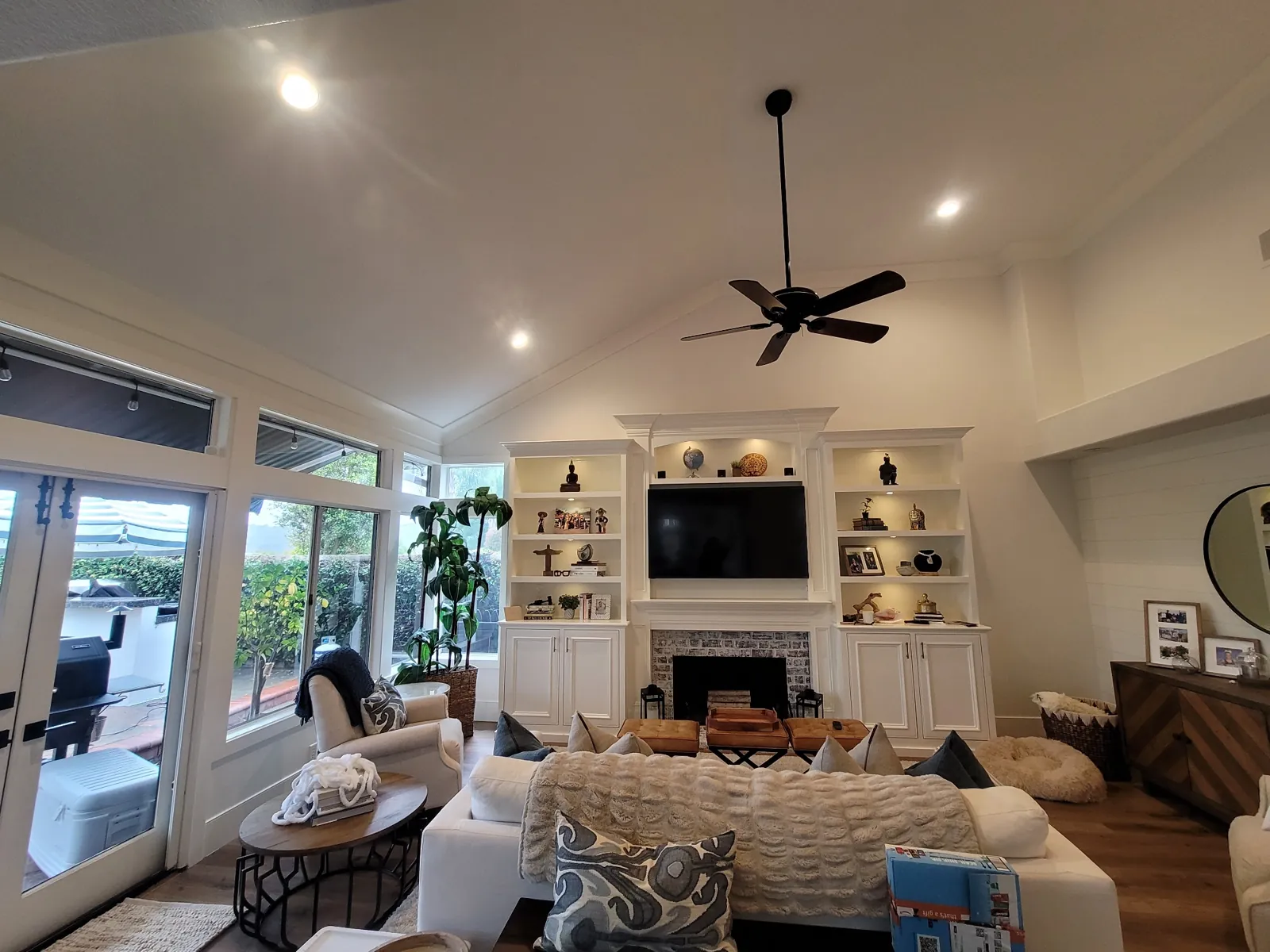
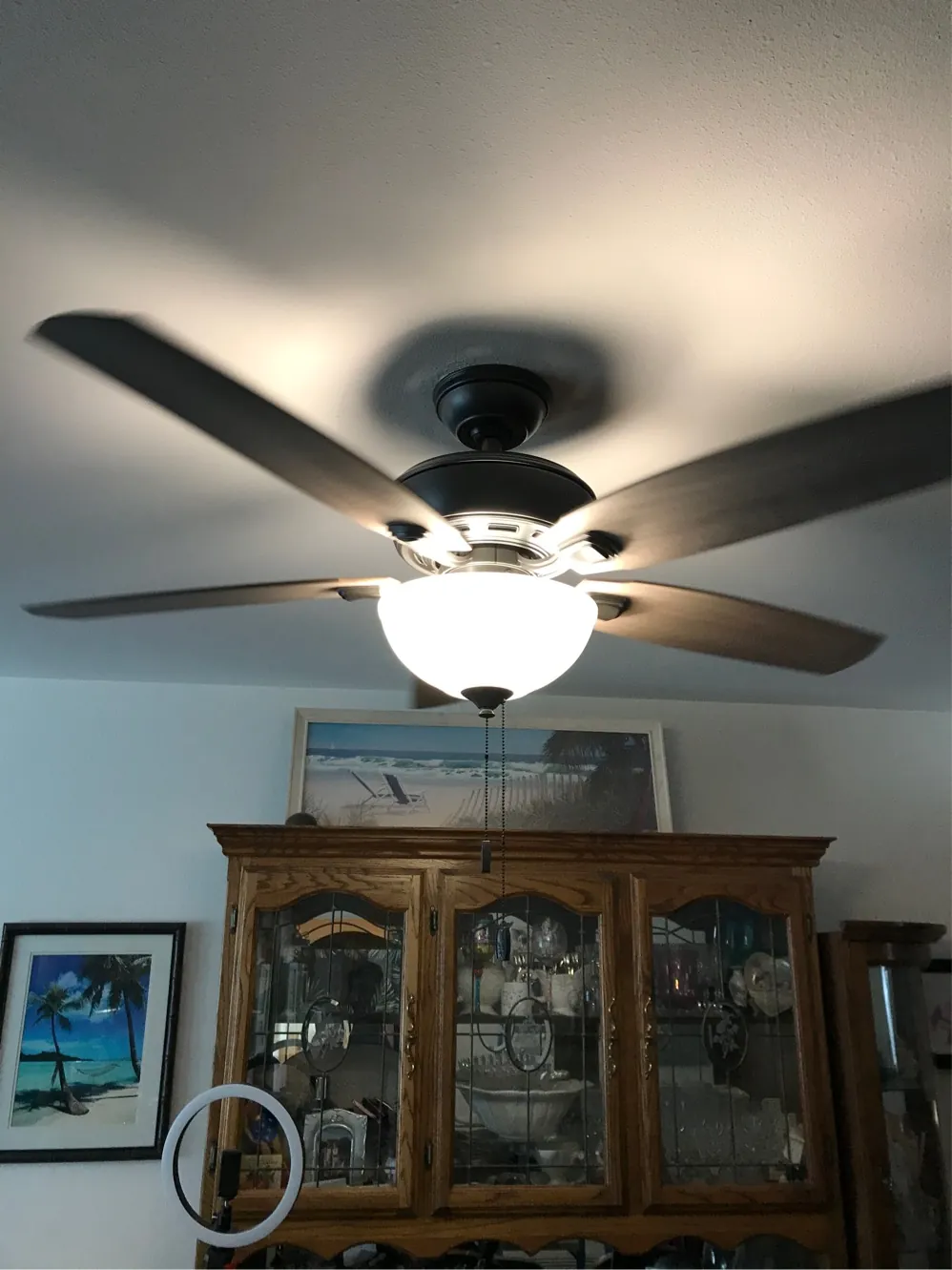
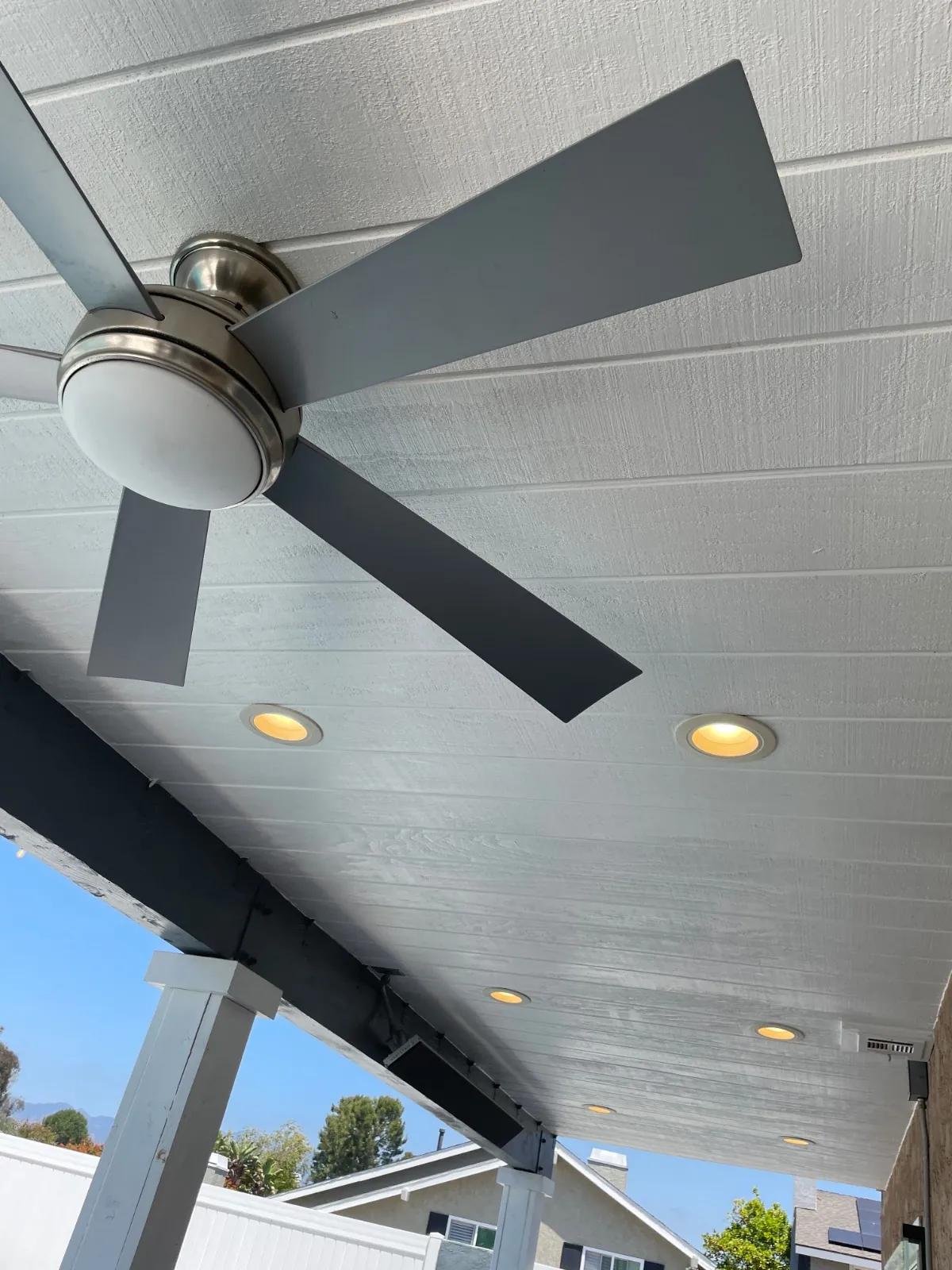
Real ASL Electric jobs in Orange County homes and businesses.
How we install a ceiling fan
Check the circuit and the ceiling
We confirm the circuit can carry the fan and any lights, and check the ceiling structure and attic access to plan a secure mount.
Size and place the fan
Fan size depends on room size; height depends on the ceiling. We choose blade span and downrod length so the fan moves air well and clears heads and furniture safely.
Install a fan-rated box
We install a fan-rated box or brace secured to the framing, rather than relying on an existing light box or an underpowered, bargain box.
Wire, balance and test
We wire to current code, add the controls you want, balance the blades and test at every speed so the fan runs quietly and wobble-free.
Ceiling fan options
Standard AC fans
Reliable and affordable with pull chains or wall controls; ideal for bedrooms and family rooms.
DC motor fans
Quieter, more efficient and usually include a remote with more speeds, great for bedrooms and living spaces.
Fans with LED light kits
Combine light and air in one fixture, often with separate switching or dimming for the light.
Outdoor rated fans
Damp or wet rated for covered patios and pergolas where moisture and salt air are a factor.
Choosing the right fan size and height
Blade span should match the room. As a general guide, small rooms up to about 75 square feet, such as a bathroom or laundry, suit fans around 29 to 36 inches; bedrooms and offices up to about 144 square feet suit 36 to 42 inches; larger bedrooms and family rooms up to about 225 square feet suit around 44 to 50 inches; and great rooms and open living areas often need 52 inches or more, or two fans.
Height matters as much as size. Blades should sit at least 7 feet above the floor, and 8 to 9 feet usually moves air best. On standard 8-foot ceilings we use a low-profile or short-downrod mount; on 10-foot and vaulted ceilings we use a longer downrod so the fan sits in the airflow zone. Keep blade tips well clear of walls, cabinets and light fixtures, and avoid placing a fan right under a recessed light, which causes a strobing flicker.
Getting the most comfort from your fan
Ceiling fans cool people, not rooms, by creating a breeze across the skin. In summer, run the fan counterclockwise (looking up) so it pushes air down, and you can often set the thermostat a few degrees higher and stay just as comfortable. In cooler months, reverse it to clockwise on low speed to gently move warm air down from the ceiling without creating a draft.
Because a fan only helps when someone is in the room, turn it off when you leave. DC motor fans and smart controls make that easy, with remotes, wall controls, schedules and voice control, and they use noticeably less energy than older AC motor fans.
What affects the cost of a ceiling fan installation
The main factors are whether wiring and a box already exist, whether the box must be replaced with a fan-rated one, ceiling height and slope, attic access, the type of controls (pull chain, wall control, remote or smart), whether the fan comes with a light kit, and how many fans we are installing on the same visit. Estimates are free, and we tell you the price before we start.
How it works with ASL Electric
Let us know where the fan is going, the ceiling type and whether there is an existing light or fan there.
We confirm the plan, the mounting and the controls, and give you a price before any work begins.
We install, wire and balance the fan, test every speed and the light, and leave the room clean.
Ceiling Fan Installation across Orange County
Ceiling fan installations are some of our most frequent calls across Orange County. In the single-story and two-story homes of Laguna Hills, Mission Viejo and Irvine, many bedrooms and family rooms were built with a light fixture or nothing at all in the ceiling, and adding a fan means replacing the box with a fan-rated one. In Rancho Santa Margarita, Trabuco Canyon and other inland neighborhoods that run warmer in summer, fans help keep rooms comfortable with less air conditioning; customers there have had fans installed without needing any drywall repairs.
Near the coast in Dana Point, Laguna Beach and Newport Beach, covered patios and outdoor living areas call for damp or wet-rated fans that can handle salt air. Whatever the room, we install the fan securely, balance it so it runs quietly and leave everything clean.