
 ASL
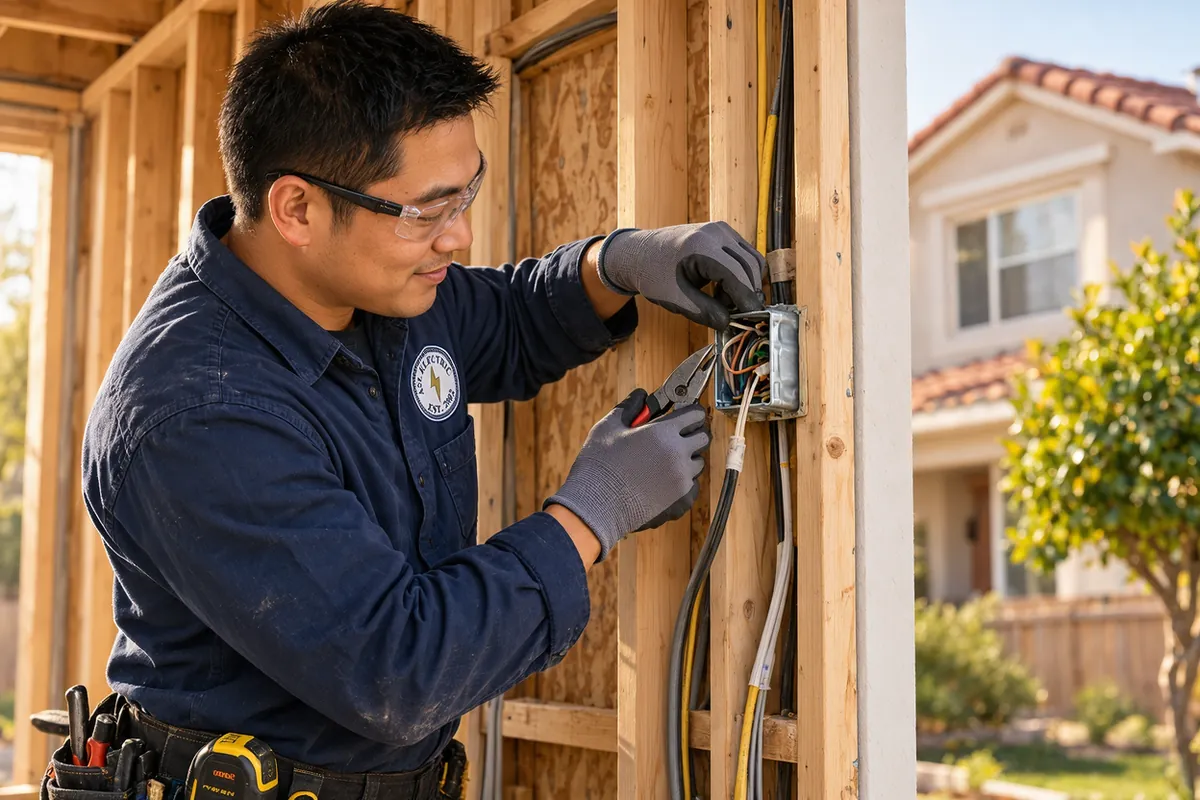
Accessory dwelling units are adding much-needed living space across Orange County, for family members, guests, home offices and rental income. Whether it is a detached backyard unit, an attached addition or a garage conversion, the ADU needs a complete electrical system of its own, and your existing service has to be able to support it. ASL Electric provides full ADU electrical wiring, from the load calculation and service planning to final inspection.
We plan the electrical for the ADU together with your designer, builder or directly with you: how the unit will be fed, whether the main service needs an upgrade, where the subpanel goes, and how circuits, lighting, outlets, appliances, smoke and CO alarms and HVAC will be wired. Then we install it to code, pass the inspections and coordinate with Southern California Edison or SDG&E when utility work is involved.
ADU electrical services
⚡Load calculation and service planning
Calculating the combined load of the main home and the ADU to determine whether the existing service can support it or needs an upgrade.
⚡Subpanel feed to the ADU
A feeder from the main panel to a subpanel in the ADU, sized for the unit's kitchen, HVAC, laundry and lighting.
⚡Service upgrades and separate meters
Upgrading the main service when needed, and coordinating with the utility when a separate meter for the ADU is planned.
⚡Complete interior wiring
Kitchen and bathroom circuits, outlets, switches, lighting, smoke and CO alarms and HVAC circuits to current code.
⚡Garage conversions
Converting a garage into living space, including updating existing garage wiring to residential standards.
⚡Exterior and site work
Trenching coordination for the feeder, exterior lighting, path lighting and an EV-ready circuit where desired.
Electrical questions to answer before building an ADU
These decisions shape the design and the budget:
- Can the existing service support the ADU?
- Will the ADU share the main meter or have its own?
- Where will the subpanel go?
- All-electric appliances and heat pump HVAC?
- Route and distance for the feeder from the main panel
- Kitchen appliance specifications
- Laundry in the unit?
- EV charging for the ADU occupant?
Why the electrical plan comes first
Adding an ADU can significantly increase the electrical load on your property. If the service cannot support it, you may need a service upgrade, which affects the utility timeline, the location of equipment and the budget. Deciding this early, with a load calculation, avoids redesigns and delays during permitting and construction.
How we wire an ADU
Plan with the design
We review the ADU plans and appliances, run the load calculation and recommend the feeder, subpanel and any service upgrade.
Permit and utility coordination
We work within the ADU permit with your city or the County of Orange and coordinate with SCE or SDG&E for service changes.
Rough-in and feeder
We run the feeder, install the subpanel and rough-in the wiring, then pass the rough electrical inspection.
Trim-out and final
We install devices, fixtures and alarms, test every circuit and pass the final inspection.
ADU electrical approaches
Subpanel from existing service
When the main service has capacity: simplest and most affordable.
Service upgrade plus subpanel
When the combined loads exceed the existing service.
Separate meter
When the ADU will be rented and separate billing is desired, with utility coordination.
Garage conversion
Reuses the structure, with wiring upgraded to living-space standards.
Sharing the main service or adding a meter
Many ADUs are fed from the main home's electrical service through a subpanel, which is often the simplest and most affordable approach when the service has enough capacity. A separate meter can make sense for a rental unit, but it involves additional utility coordination and equipment.
We help you weigh the options based on your service size, the ADU's loads, the distance from the main panel, and how you plan to use the unit.
All-electric ADUs and capacity
Many new ADUs are all-electric, with heat pump heating and cooling, a heat pump water heater, an induction or electric range and an electric dryer. These are efficient, but they add up, and an older home with 100A service may not have room for both the main house and the ADU.
A load calculation tells you exactly where you stand. In some cases a service upgrade is needed; in others, careful equipment choices or load management keep the project within the existing service.
Garage conversions: what changes electrically
A garage was wired for storage and parking, not for people to live in. Converting it to an ADU usually means replacing or rerouting the existing garage circuits, adding bedroom and living-area outlets with AFCI protection, GFCI protection in the kitchen and bathroom, a dedicated kitchen layout, smoke and carbon monoxide alarms, and lighting and switching that meet residential code.
We also look at the garage's existing feed. Many garages are on a single shared circuit from the main panel, which cannot support a living unit. A properly sized feeder and subpanel are typically the first step, followed by the full interior wiring.
Metering options for an ADU
Most ADUs are fed from the main house through a subpanel, which keeps one utility account and one meter. Some owners prefer a separate meter so the ADU has its own utility bill, which is useful when renting the unit. A separate meter usually involves the utility, additional equipment at the service, and coordination with the building department, so it is worth deciding early in the design.
We explain the tradeoffs for your property, including how each option affects the main panel, the service size and the overall budget, so you can choose before plans are finalized.
What affects the cost of ADU electrical
The main factors are the ADU's size and appliances, the feeder distance and trenching route, whether the main service needs an upgrade, whether a separate meter is planned, the type of construction (detached, attached or conversion), and permit requirements. We provide a free, itemized estimate from your plans.
How it works with ASL Electric
We review the ADU plans and determine the right service and feeder approach.
You get an itemized quote and a schedule that fits your builder's timeline.
We install the feeder and wiring, pass inspections and coordinate any utility work.
ADU Electrical Wiring across Orange County
ADUs are being built throughout Orange County, especially in established neighborhoods with larger lots and older homes, such as Costa Mesa, Tustin, Huntington Beach, Mission Viejo, Lake Forest and Irvine's early villages. Many of these homes have 100A to 200A services that were never planned for a second dwelling, so a load calculation is the first step.
Permits run through your city, or through the County of Orange in unincorporated areas like Coto de Caza, Ladera Ranch and Rancho Mission Viejo, and utility coordination goes through Southern California Edison or SDG&E depending on your address. We handle both.