 ASL
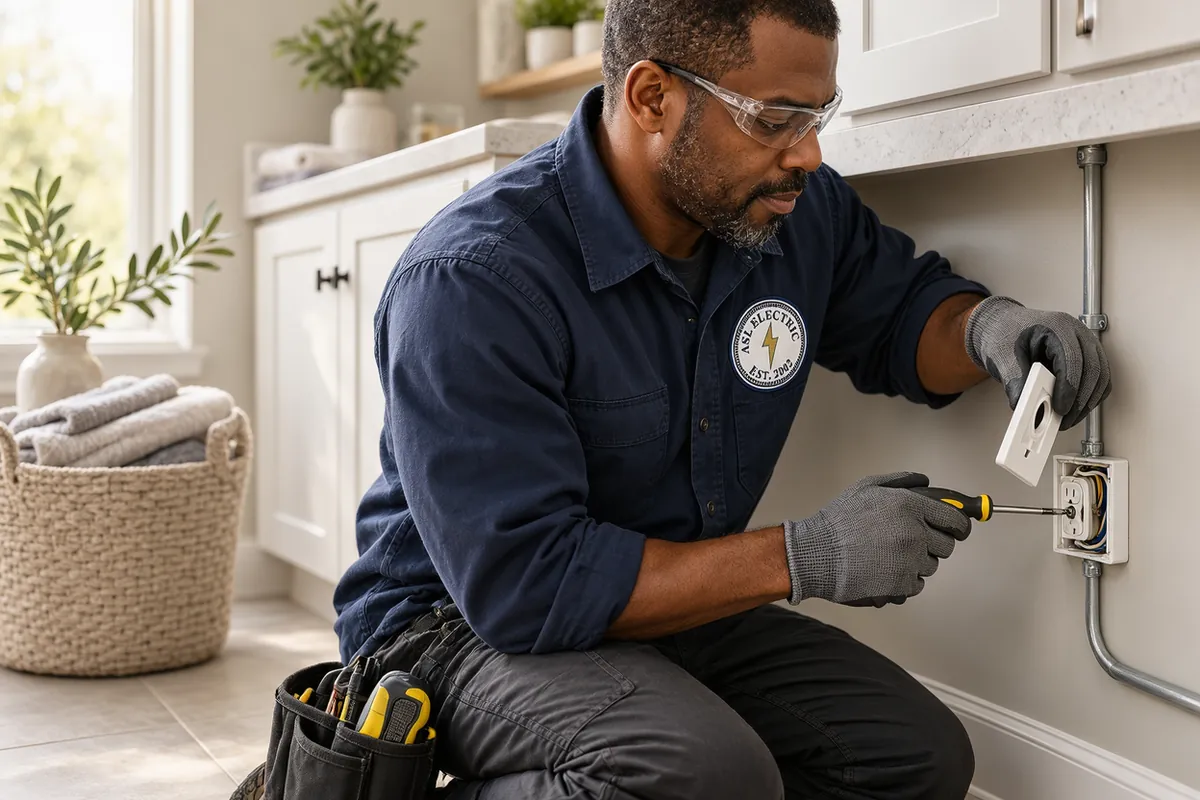
Many of the frustrations people call electricians about, breakers that trip when the microwave and toaster run together, lights that dim when a space heater starts, a garage that cannot run a tool, come down to one thing: too many loads on too few circuits. A dedicated circuit gives a single appliance its own wiring and breaker, sized correctly for the load. ASL Electric installs dedicated 120V and 240V circuits for homes and businesses across Orange County.
Before we add a circuit, we look at your panel and run a load calculation, so the new circuit fits within your service capacity and does not create a new problem. If the panel is full or near capacity, we explain the options, including subpanels, panel upgrades and load management. Then we install the circuit, pull the permit and leave you with a properly labeled breaker.
Dedicated circuits we install
⚡Kitchen appliance circuits
Circuits for ranges and cooktops, wall ovens, dishwashers, disposals, built-in microwaves, refrigerators and countertop small-appliance circuits.
⚡Laundry circuits
A 20-amp laundry circuit and 240V circuits for electric dryers, including conversions when switching from gas.
⚡240V lines
240V circuits for induction cooking, electric dryers, heat pump water heaters, mini-split and heat pump HVAC, and workshop equipment.
⚡EV charging circuits
Dedicated circuits sized for Level 2 EV chargers and 240V outlets. See our EV charger installation page for details.
⚡Garage and workshop circuits
Circuits for freezers, refrigerators, air compressors, table saws and welders, plus additional outlets and lighting.
⚡Home office and media circuits
Dedicated circuits for home offices, servers, home theaters and equipment that should not share a circuit with other loads.
Signs you need a dedicated circuit
A new circuit is usually the fix when:
- A breaker trips when two appliances run together
- Lights dim when the microwave or vacuum starts
- You rely on extension cords or power strips for appliances
- You are adding an induction range or electric dryer
- You are installing a heat pump or mini-split
- You want an EV charger in the garage
- Your garage cannot run power tools or a freezer
- You are adding a home office, gym or media room
Why sharing circuits is a problem
Every circuit is designed for a certain load. When heavy appliances share one, the breaker trips, and if it is constantly reset or replaced with a larger one, the wiring can overheat. Motor loads like refrigerators and freezers can also be disrupted, and sensitive electronics suffer from voltage dips. A dedicated circuit solves the problem permanently and is often required by code and by the appliance manufacturer.
How we add a dedicated circuit
Load calculation
We check your panel's capacity and current loads to confirm the new circuit fits, and recommend a subpanel, upgrade or load management if it does not.
Right wire, right breaker
We size the wire and breaker for the appliance's specifications and the distance from the panel, and add GFCI or AFCI protection where code requires it.
Clean routing
We route the circuit through attics, crawl spaces, walls or conduit with minimal disruption, and install the correct receptacle or connection for the appliance.
Permit, label and test
We pull the permit where required, label the breaker clearly and test the circuit under load.
Options when your panel is full
Add the circuit directly
When the panel has space and capacity: the simplest and most affordable solution.
Subpanel
When the panel is out of spaces but the service has capacity, a subpanel adds room in the garage or addition.
Panel or service upgrade
When the service itself is too small for the new loads.
Load management
When a device can share capacity between loads, such as an EV charger and a dryer, avoiding an upgrade.
120V or 240V?
Most household devices run on 120 volts, and many need only a dedicated 15 or 20-amp circuit. Larger loads such as electric ranges and cooktops, dryers, heat pump water heaters, mini-splits, EV chargers and some workshop tools run on 240 volts, which uses two legs of your panel and takes up two breaker spaces.
The appliance's installation manual specifies the voltage, circuit size and receptacle type. We follow those requirements and the California Electrical Code, so the appliance runs properly and the warranty stays valid.
Going electric: induction, heat pumps and dryers
Many Orange County homeowners are replacing gas appliances with induction cooktops, heat pump water heaters and electric dryers, and California's 2025 Energy Code adds electric-ready requirements in some new work. Each of these needs a 240V circuit, and together they can exceed an older panel's capacity.
We plan these conversions as a whole, so you know the total capacity needed and whether a panel upgrade, a subpanel or load management is the best path, instead of discovering it one appliance at a time.
Circuits for heat pumps and mini-splits
Heat pumps and ductless mini-splits each need a dedicated 240V circuit sized to the equipment's nameplate, along with a disconnect within sight of the outdoor unit. Multi-zone systems may need more capacity than a single head.
We coordinate with your HVAC contractor so the circuit, breaker and disconnect match the equipment, and confirm the panel can support the new load.
“Cory from ASL came to our house to provide a more precise estimate for our project. Unfortunately, we do not have enough room in the electric panel to add another 240v breaker. He told us the bad news even though that means no business for ASL. He also shared his honest opinions on what we could do and did not charge us the fee for his visit.”
What affects the cost of a dedicated circuit
The main factors are the circuit size and voltage, the distance from the panel to the appliance, the route through attics, walls or conduit, whether the panel has space and capacity, GFCI or AFCI requirements, the type of receptacle or connection, and permit requirements. We give you a free estimate after checking the panel and the route.
How it works with ASL Electric
We confirm capacity and plan the shortest, cleanest route to the appliance.
You get a price, including any panel work needed, before we start.
We install the circuit, pull the permit where required, label the breaker and test it under load.
Dedicated Circuits & 240V Lines across Orange County
In Orange County's older homes, built when kitchens had fewer appliances and no one had an EV, adding circuits is one of the most common upgrades we make. In Lake Forest, Mission Viejo, Costa Mesa and the early villages of Irvine, many kitchens, garages and laundry rooms were wired for far smaller loads than families use today. Inland neighborhoods like Rancho Santa Margarita see more mini-split and heat pump installations, each needing its own 240V circuit.
Sometimes the honest answer is that the panel cannot take another circuit. One customer had us out to estimate an added 240V breaker; there was not enough room in the panel, and our electrician told them so, shared their options and did not charge for the visit. We would rather give you the right answer than sell you the wrong job.