 ASL
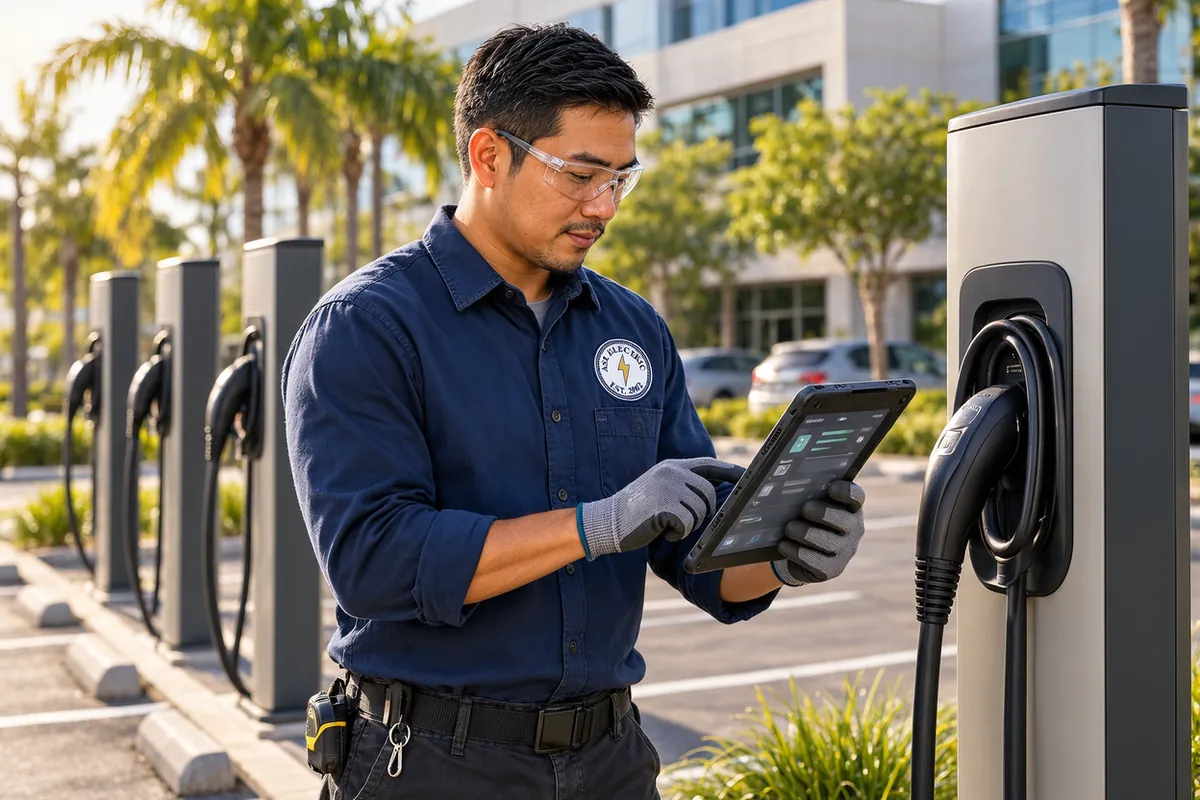
Employees, tenants and customers increasingly expect a place to charge. ASL Electric installs Level 2 EV charging stations for Orange County businesses, office buildings, retail centers, apartment communities and managed properties. We look at your electrical service, your parking layout and how the chargers will be used, then design an installation that works today and leaves room to grow.
The most important part of a commercial charging project happens before any conduit is installed: confirming how much capacity the site has, where the chargers make sense, and whether load management can serve more spaces without a service upgrade. We give you a clear written scope, coordinate with the utility when needed, and handle permits and inspections from start to finish.
Commercial charging work we handle
⚡Workplace charging
Level 2 stations for employee parking, sized for a full workday of charging.
⚡Multifamily and tenant charging
Chargers for apartment residents and commercial tenants, with options for access control and billing through the charger platform you choose.
⚡Retail and customer charging
Visible, convenient stations for customers and visitors, placed and protected for heavy traffic.
⚡Fleet charging
Overnight charging for company vehicles, planned around your fleet's routes and dwell times.
⚡Load-managed installations
Systems that share available capacity across many chargers, so you can add more spaces without upgrading the service.
⚡Infrastructure for later
Conduit, panels and capacity installed now so additional chargers can be added later at lower cost.
When businesses call us
Typical starting points include:
- Employees or tenants asking for charging
- A new building or parking lot project
- A tenant improvement that includes EV spaces
- Existing chargers that are unreliable or underpowered
- An electrical service that may be near capacity
- Plans to electrify a company fleet
- Wanting chargers that customers can find and use
- Needing a clear budget before committing
Why the design stage matters
Charging projects go wrong when chargers are added without checking the service, when spaces are placed where trenching is most expensive, or when accessibility requirements are discovered late. The result can be an unplanned service upgrade, extra concrete work or a failed inspection. A proper site survey and load calculation up front keep the budget and schedule predictable.
Recent work by our electricians
All projects ›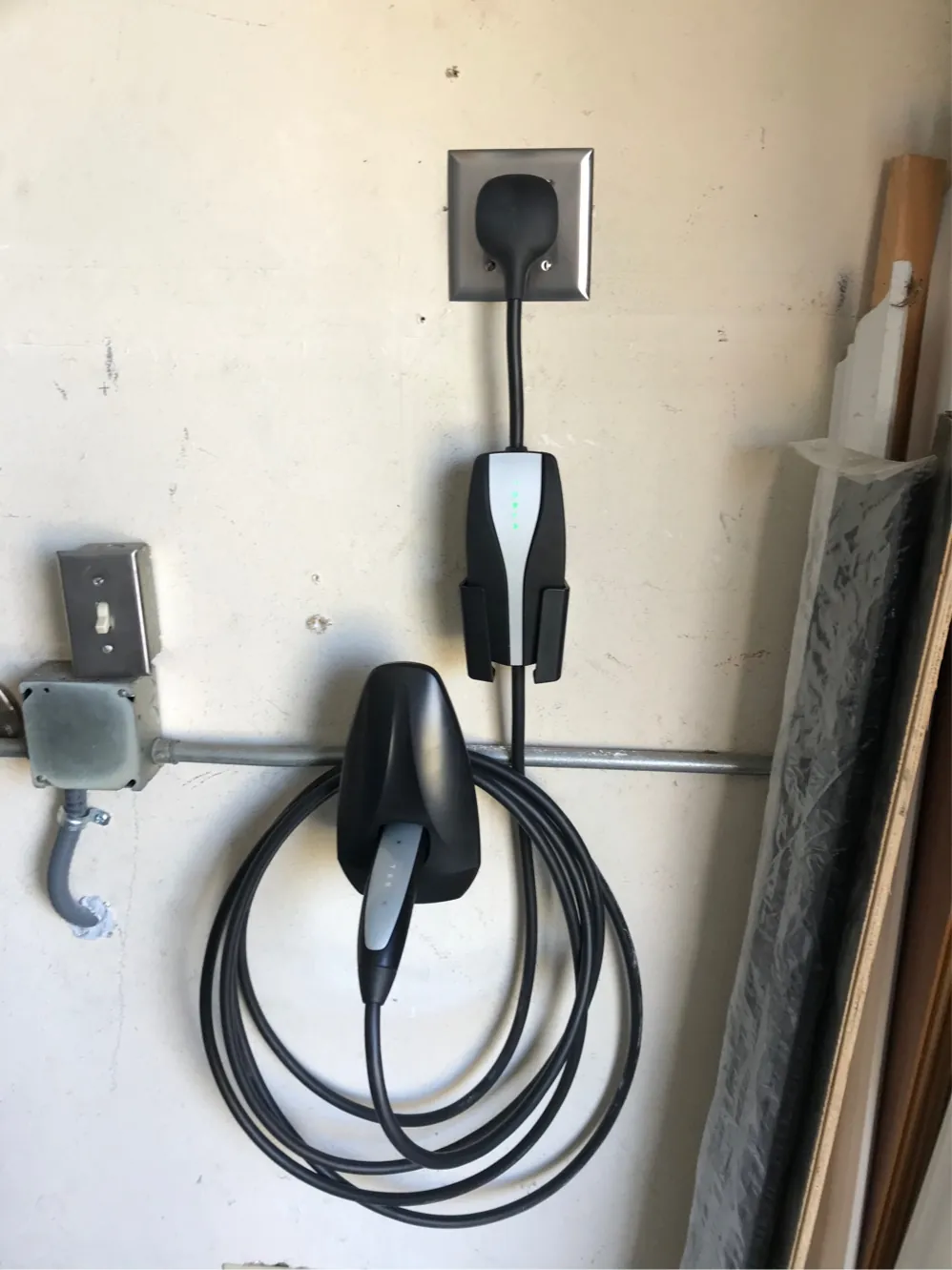
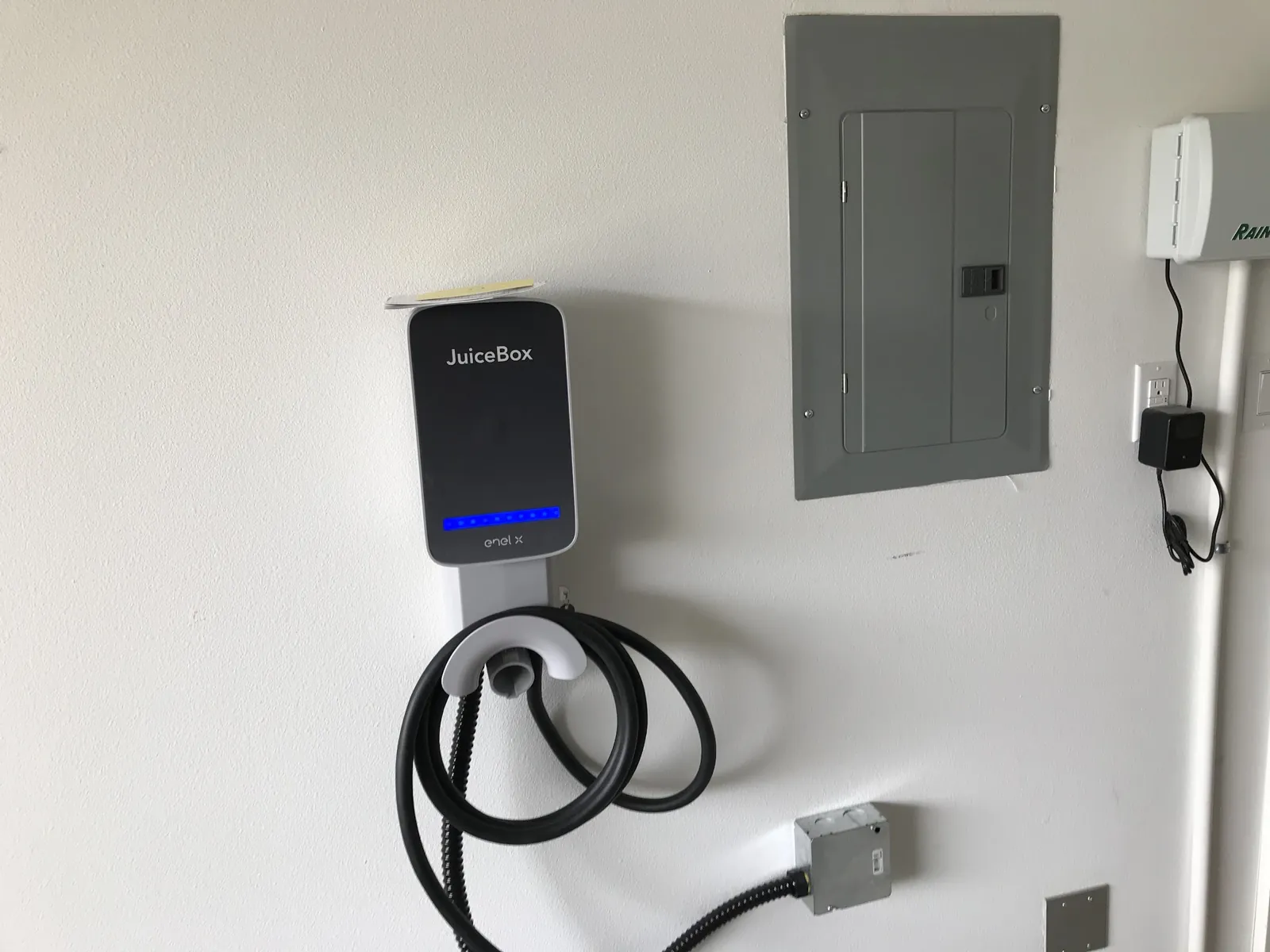
Real ASL Electric jobs in Orange County homes and businesses.
How we deliver a commercial charging project
Site survey
We review the electrical service, panels, parking layout and the shortest practical conduit routes.
Capacity and load management
We calculate available capacity and show how many chargers it supports, with and without load management.
Permits and accessibility
We pull permits and lay out spaces with California's accessibility requirements for EV charging in mind.
Install, commission, inspect
We install conduit, circuits and stations, commission the chargers with your chosen platform, and pass inspection.
Ways to structure your charging
A few dedicated chargers
Simple and fast when capacity allows.
Load-managed network
More chargers on the same capacity, sharing power automatically.
Phased build-out
Infrastructure for many spaces now, chargers added over time.
Service upgrade
When the site needs more capacity for the number of chargers planned.
Level 2 for most sites
Level 2 charging is the right fit for most workplaces, apartments and retail centers, where vehicles are parked for hours. It uses 208 or 240 volt circuits and can often be added within a building's existing capacity, especially with load management.
DC fast charging serves very different needs, such as short stops and high-mileage fleets, and usually requires significant service capacity and utility planning. We help you decide which fits how your site is actually used.
Plan for growth
Demand for charging tends to grow after the first stations go in. Installing extra conduit and panel capacity during the first phase is far cheaper than trenching or coring again later. We design the first phase with the next one in mind.
New construction and tenant improvements
California's building standards include EV readiness requirements for many new projects and some alterations. If your project is in design, bring us in early so the charging infrastructure is coordinated with the rest of the electrical work. See our tenant improvement electrical page for build-outs.
What affects the cost of commercial EV charging
The main factors are the number and type of chargers, the available electrical capacity, the distance from the panel to the spaces, trenching, coring or surface conduit, concrete and paving repairs, accessibility requirements, the charger network you choose, utility requirements and permit fees. We give you a free, written proposal after the site survey.
How it works with ASL Electric
We review your service, parking and goals.
You get a scope, capacity plan and upfront price.
We install, commission the chargers and pass inspection.
Commercial EV Charging Stations across Orange County
We install charging for offices and industrial buildings in Irvine, Lake Forest and Costa Mesa, retail and mixed-use centers across South Orange County, and apartment and condo communities from Huntington Beach to San Clemente. Many of these properties were built long before EV charging, so capacity planning is usually the first conversation.
Our shop is in Lake Forest, so we are close to the business parks of Irvine and Lake Forest and can respond quickly for surveys and service. For condo owners and HOAs, see our condo and HOA EV charger page.